
Summary Highlights
- The SEC is advancing generic listing standards for crypto exchange-traded products (ETPs).
- If approved this month, Nasdaq, Cboe, and NYSE Arca could list new token ETFs in weeks, not months.
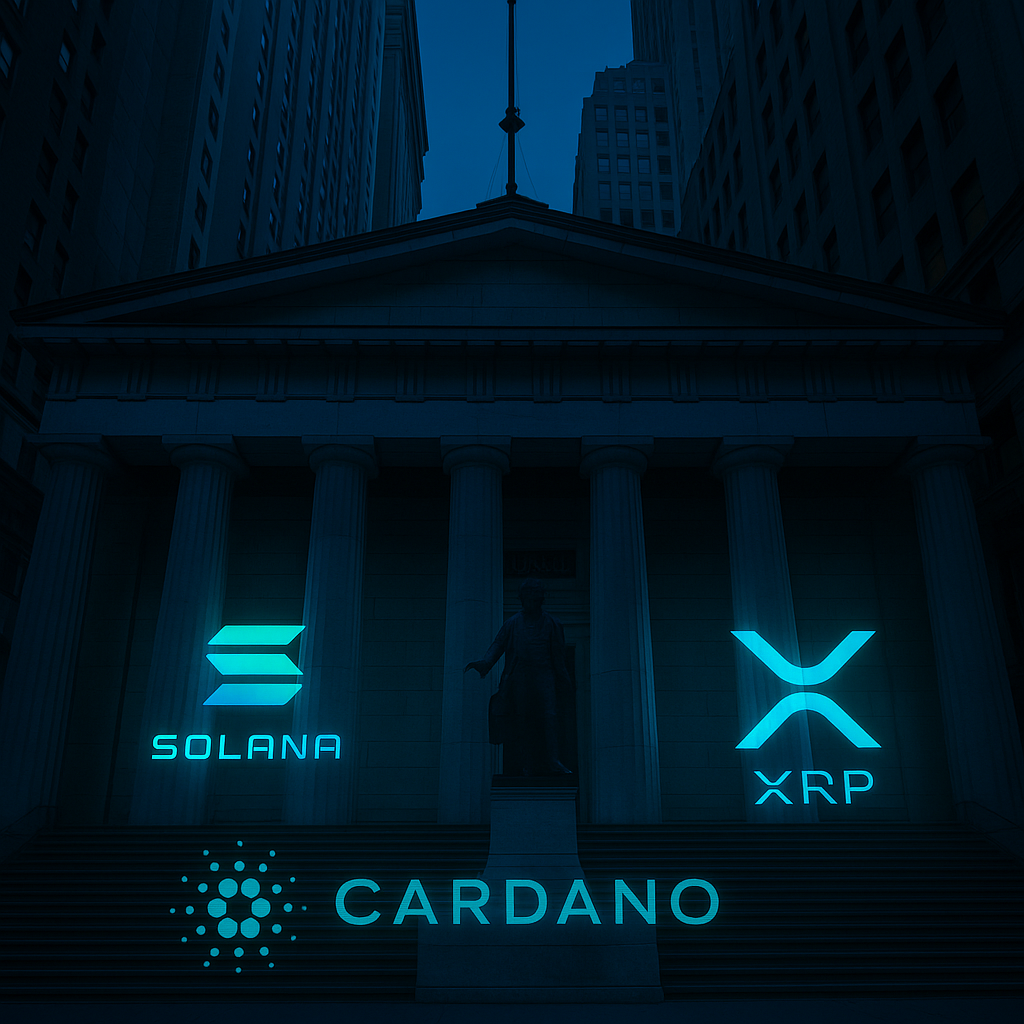
- ETFs tied to Solana, XRP, and Cardano are expected to lead the first wave.
- For New York fund managers and ETF sponsors, this is a regulatory green light.
A Historic Pivot in U.S. Regulation
For more than a decade, crypto advocates have fought to convince U.S. regulators that digital assets deserve equal treatment with traditional commodities. Every Bitcoin ETF, Ethereum ETF, and blockchain fund has been subjected to grueling 19b-4 applications, dozens of rounds of comments, and endless delays.
Now the SEC is signaling something different: a generic listing framework. This would allow exchanges like Nasdaq, Cboe, and NYSE Arca to approve certain crypto ETFs automatically, provided they meet predefined standards.
Instead of the industry waiting six to twelve months for bespoke approvals, products could hit the market in as little as two to four weeks.
It’s a radical simplification — and a statement that crypto has earned a seat at Wall Street’s main table.
Why This Matters for Wall Street
The ETF market is the crown jewel of U.S. finance, worth more than $8 trillion. Gaining access to that distribution channel has always been crypto’s dream.
For traditional institutions:
- ETF sponsors can move faster and launch altcoin products without regulatory bottlenecks.
- Wealth managers can offer clients diversified digital asset exposure in retirement accounts and advisory portfolios.
- Traders gain liquidity pools deep enough for institutional-sized orders.
For crypto firms:
- Lower listing costs mean more niche tokens might find a path to legitimacy.
- First-mover advantage becomes critical — whoever launches the first Solana or XRP ETF will likely dominate flows.
In short, this isn’t just regulation. It’s infrastructure.
The New York Lens
New York’s financial ecosystem is uniquely positioned to benefit.
- Midtown asset managers like BlackRock and Invesco are already filing for altcoin ETFs.
- Law firms downtown are staffing up compliance teams to handle ETF structuring.
- Recruiters in the Financial District report rising demand for ETF specialists with digital asset expertise.
- SoHo fintech startups see this as validation: crypto isn’t shadow finance anymore — it’s productized, listed, and tradable on Wall Street.
For a city that prides itself on being the global capital of capital, this move is vindication.
Investor Impact: A New Toolkit
- Diversification — Investors won’t be limited to BTC and ETH. Altcoin ETFs give retail and institutions exposure to the broader ecosystem.
- Risk Transparency — ETFs trade on regulated venues with daily reporting, custody checks, and liquidity oversight.
- Accessibility — Buying Solana or XRP exposure could soon be as easy as buying SPY or QQQ.
- Market Legitimacy — Institutional investors, from pension funds to endowments, may finally allocate to altcoins through ETFs without legal gray areas.
This is not about speculation. It’s about integration into the U.S. financial system.
What’s Next on the Calendar
The timeline is aggressive:
- Sept 10: Draft framework expected to be published.
- Sept 24: Tentative SEC vote on adoption.
- Oct 2025: First altcoin ETFs (likely Solana, ADA, XRP) could begin trading on Nasdaq or NYSE Arca.
If this schedule holds, New Yorkers could see token ETFs flashing on Times Square tickers before Halloween.
Risks That Remain
Of course, no shift comes without concerns.
- Eligibility filters: Will meme coins like DOGE or SHIB pass muster? Probably not — at least not immediately.
- Market volatility: Altcoins can swing 10–20% in a single day. ETFs may inherit that turbulence.
- Liquidity traps: If products launch too quickly without depth, spreads could widen and hurt investors.
- Oversight lag: Regulators may struggle to monitor dozens of new ETFs if they all launch at once.
Wall Street is excited. But it’s also cautious.
NYC Perspective: Boots on the Ground
Talk to anyone on the ground in Manhattan, and you’ll hear the same buzz.
- On trading desks in Midtown, quants are back-testing Solana ETF arbitrage strategies.
- In cafes in SoHo, founders are sketching new fintech apps that will integrate token ETF data.
- At bars in the Financial District, lawyers are joking about “ETF season” being the new IPO wave.
Crypto isn’t just entering policy discussions. It’s entering culture.
And for New York, a city built on money flows, this cultural adoption matters as much as regulatory approval.
The Bigger Picture
If adopted, this framework will transform how the U.S. treats digital assets. No longer curiosities or speculative bets, tokens like Solana and Cardano would become part of the regulated financial mainstream.
That shift has global implications:
- Europe’s MiCA rules already paved the way for standardized crypto products.
- Hong Kong and Singapore are aggressively positioning as ETF hubs.
- The U.S. cannot afford to lag — and New York cannot afford to lose its crown.
Editorial Wrap
The SEC’s fast-track ETF plan is not just another regulation. It’s the clearest signal yet that crypto is here to stay. By building a faster lane for ETFs, regulators are acknowledging that digital assets deserve shelf space beside stocks, bonds, and commodities.
For investors, it’s a toolkit. For Wall Street, it’s a new product line. For New York, it’s a legacy-defining moment.
When Solana, ADA, and XRP ETFs hit the boards, it won’t just be a milestone for crypto. It will be New York proving, once again, that it is the financial capital of the world — and now the crypto capital too.Stay tuned with CryptoCurrency.ɴʏᴄ — and follow @crypto_n_y_c for real-time Wall Street × Web3 coverage.

